
Kenni Uribe, LCSW
LIcensed Clinical social worker
Therapist | Founder | Clinical Supervisor | Consultant
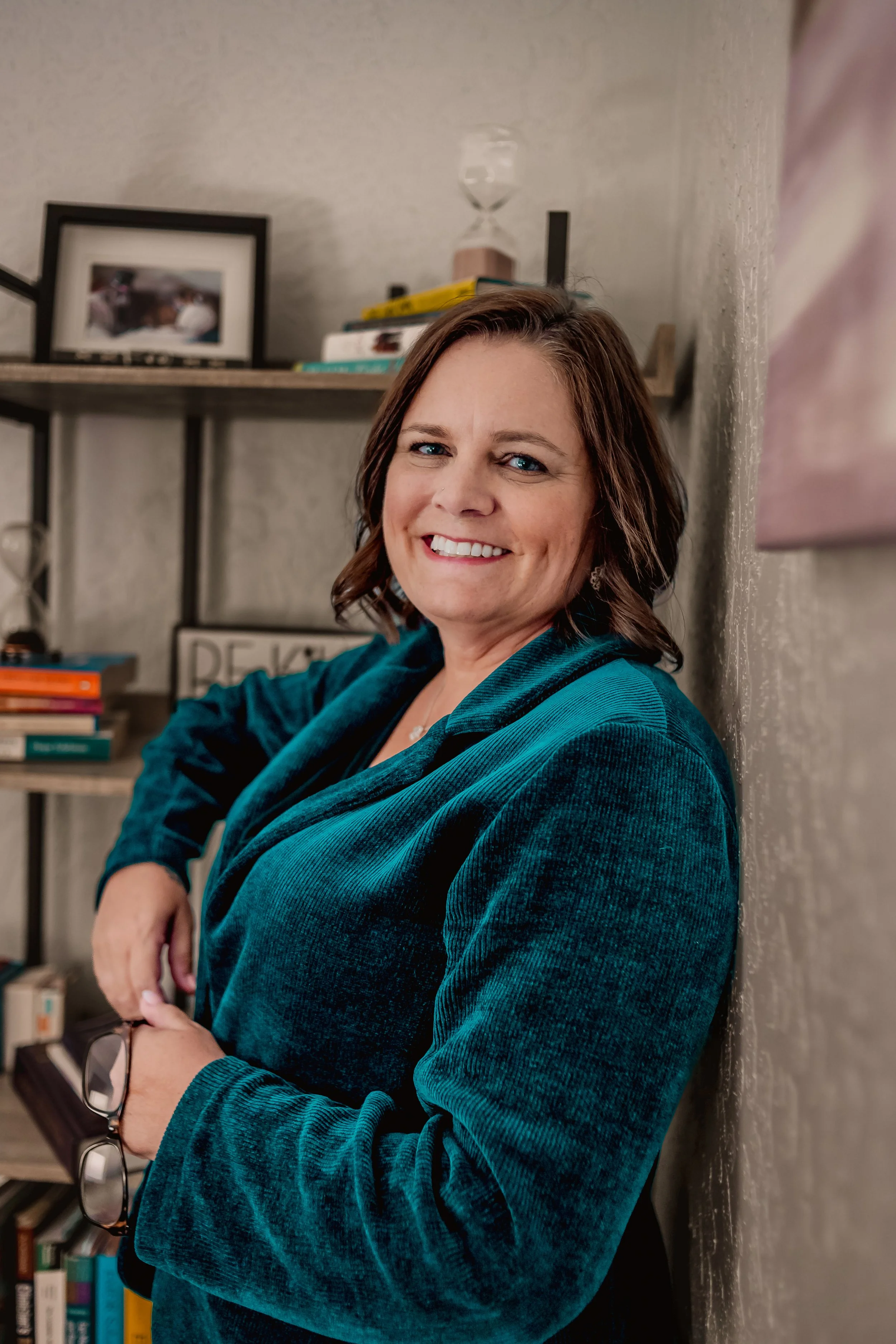
What happened to you matters. But it doesn't have to run your life.
I'm a trauma therapist and the founder of Momenta Trauma Solutions. I work with adults who have experienced trauma and are ready for something different—not necessarily to forget what happened, but to stop allowing it to have so much control over what happens next.
I believe healing is possible. Not in the sense that the past disappears or that difficult experiences suddenly stop mattering, but in the sense that you can build a life where your trauma no longer gets to make every decision.
You can feel safe in your own life again. You can have meaningful relationships. You can laugh, experience joy, set boundaries, trust yourself, try new things, and look forward to the future. Good things can still happen to you. You are more than what happened to you.
-
I don't believe there is one right way to do trauma therapy. Every person brings a different history, different strengths, and different ways of making sense of their experiences. My approach is collaborative, individualized, and grounded in the belief that you should have a voice in your own therapy.
I draw from trauma-focused approaches including EMDR, Internal Family Systems (IFS), CBT, and other evidence-informed interventions. Sometimes therapy means processing experiences from the past. Sometimes it means learning how to set boundaries, reconnect with yourself, strengthen relationships, or figure out who you are now.
The goal isn't to spend the rest of your life talking about what happened.
The goal is to help you understand what happened, reduce the ways it continues to affect you, and build the capacity to live the life you want now.
-
I primarily work with adults experiencing trauma and its lasting effects, including PTSD, complex trauma, first responder and military-related trauma, and trauma connected to significant life experiences and transitions.
I have a particular interest in working with women and in women's health, especially during significant reproductive and hormonal transitions. Pregnancy, postpartum, hysterectomy, perimenopause, and menopause can bring profound physical, emotional, and identity changes, yet many women receive little education or support for what they are experiencing. There are also significant disparities in how women's health concerns are researched, understood, and treated.
For some women, these experiences are complicated by previous trauma, medical trauma, reproductive trauma, or the experience of not being heard or believed by healthcare providers. I believe women deserve to understand what is happening in their bodies and to have their experiences taken seriously.
I also work with service members, veterans, and first responders, including those who have experienced sexual assault, military sexual trauma, moral injury, or other experiences that occurred within systems they were expected to trust. As a Navy veteran, I understand that military experiences—and the transition out of military life—can shape people in ways that aren't always easy to explain to someone who hasn't lived them.
My work is not limited by gender. I work with men and women who have experienced trauma and want to build a life that is not organized around what happened to them.
-
I earned my Bachelor’s and Master’s degrees in social work at the University of Wyoming and maintain licensure as a Licensed Clinical Social Worker in Arizona, Colorado, and Wyoming. My clinical training includes trauma-focused approaches such as EMDR and Internal Family Systems, as well as CBT and other evidence-informed methods.
I believe education doesn't end with a degree or a license. My professional training continues as I deepen my understanding of trauma, the nervous system, relationships, life transitions, and the many ways people make meaning of what they've experienced.
I don't believe becoming a therapist means you ever stop learning.
Trauma work is complex, and the people who trust me with their stories deserve a therapist who continues to grow. I'm committed to ongoing education, training, and self-reflection so I can keep developing as a clinician and provide the best care I can.
I'm curious by nature, and I genuinely enjoy learning. I want to understand more, not because I believe there is one perfect way to do therapy, but because I want to have more tools available when something isn't working or when a client needs something different.
-
I created Momenta because I believe people deserve trauma therapy that recognizes both the reality of what they've lived through and the possibility of what comes next.
I wanted to create a place where trauma is not simply one concern among many, but the focus of the work. As Momenta grows, I plan to work with clinicians who have dedicated training and experience in trauma and who share this approach to care. The goal is to build a practice where clients can find providers who bring depth and focus to trauma work rather than trying to be everything to everyone.
I also wanted to create space for trauma work to happen in a way that isn't always possible within traditional therapy structures. Insurance, session limits, and diagnosis-driven treatment can sometimes make it difficult to give complex trauma the time, flexibility, and depth it deserves. I wanted to create another option.
Trauma can take up a tremendous amount of space in a person's life. It can influence relationships, choices, emotions, beliefs, and the way you see yourself and the world.
But it doesn't have to stay in charge.
Sometimes healing means processing what happened. Sometimes it means recognizing the ways trauma is still showing up. Sometimes it means discovering parts of yourself that got lost along the way.
And sometimes healing means realizing that you're allowed to want more than simply getting through the day.
You're allowed to want peace.
You're allowed to want connection.
You're allowed to laugh again.
You're allowed to experience good things without waiting for something bad to happen.
You're allowed to have a life that feels like yours.Momenta was created to bring together trauma-focused care, meaningful clinical depth, and the time and space to do the work differently.
Because healing is possible.
Your trauma can be part of your story without being the story.
That's what I hope Momenta can help make possible.
-
I want you to be comfortable being yourself in the therapy room. I don't expect you to show up perfectly put together, have the right words, or know exactly what you need. I'm a real person, too.
I'm a little quirky, and I love that about myself. I take my shoes off when I'm comfortable, occasionally forget the word I'm looking for, and I might curse once in a while. I don't expect you to show up perfectly polished in therapy because I don't either. I want you to feel comfortable being a real person in the room with me.
I'm also a Navy veteran, and my experiences have shaped some of the ways I understand service, transition, resilience, and community. They have also given me a personal connection to some of the experiences that can be difficult to explain to someone who hasn't lived them.
Outside of work, you'll usually find me happiest somewhere in the mountains. Wyoming holds a special place in my heart—not just for the landscape, but for the culture and values I find there: independence, authenticity, resilience, community, and a certain willingness to just be yourself. I'm also drawn to the beauty and openness of the Western landscape more broadly. The mountains have a way of putting things in perspective for me.
I love dogs. If there's a dog nearby, there's a very good chance I'm going to stop to say hello. I love concerts, too, and my Spotify playlist is proof that I have a hard time committing to just one genre of music. My taste is pretty much all over the place—and I'm perfectly happy with that.
Therapy can be serious work without being stiff or formal. There will be hard conversations, but there can be laughter too. I want you to be able to exhale, settle in, and be yourself.